
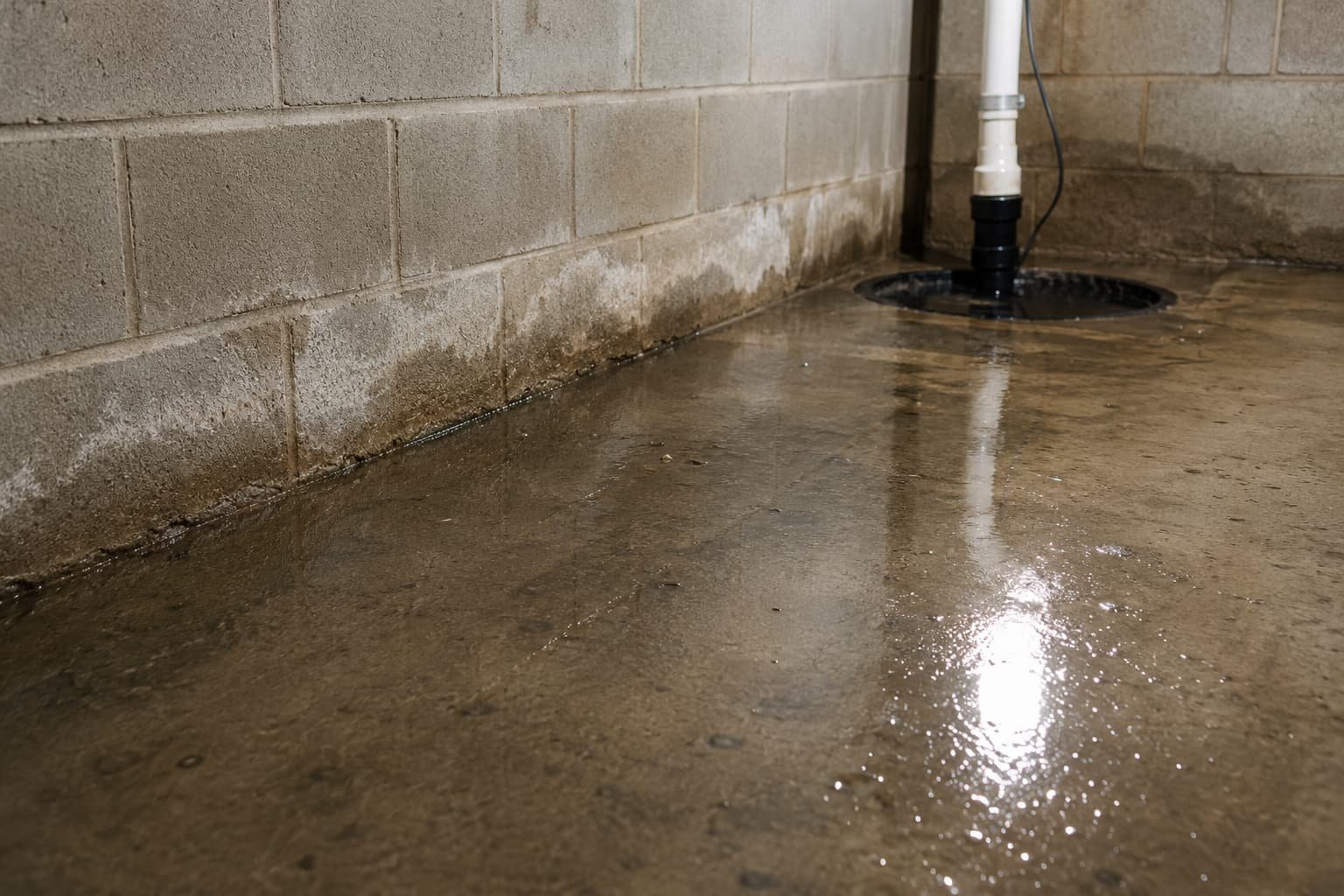
Basement flooding is one of the most stressful problems a Lancaster homeowner can face, and in a region of rivers, creeks, and high groundwater it is also one of the most common. The good news is that most basement flooding is both explainable and preventable once you understand what is driving it. This guide covers what causes basement flooding in Lancaster, what to do when it happens, and how to stop it from happening again.
What Causes Basement Flooding in Lancaster
Basement flooding usually comes from one of a handful of causes, and in Lancaster County several of them are tied to the local landscape:
- Heavy rain and storms. Intense Mid-Atlantic downpours overwhelm the ground’s ability to drain, sending water toward and under foundations.
- A high water table. Over limestone and clay-loam ground, groundwater rises quickly after rain and pushes up through the floor and wall joints.
- Nearby rivers and creeks. Homes near the Susquehanna, the Conestoga, and creeks like the Cocalico and Little Chiques feel the water table climb when those waterways rise.
- A failed or missing sump pump. When the pump that should be removing water quits, or loses power in a storm, the basement floods even though the system was meant to prevent it.
- Foundation cracks. Cracks in the wall or floor give pressurised groundwater a direct route in.
- Poor grading and gutters. Ground that slopes toward the house, or clogged downspouts dumping water at the foundation, sends surface water straight to the basement.
What to Do When Your Basement Floods
If your basement is actively flooding, safety comes first. Standing water and electricity are a dangerous combination, so do not wade into a flooded basement until power to that area is safely shut off. Once it is safe, the priority is removing the water and drying the space quickly to limit damage and prevent mold, which can take hold within a couple of days. Guidance from FEMA on dealing with flooded lower levels stresses exactly this: stay safe, document the damage for insurance, then dry the area thoroughly before restoring it.
Once the immediate situation is handled, the most important step is finding out why it flooded. A basement that has flooded once will almost always flood again unless the underlying cause is addressed.
How to Prevent Basement Flooding
Preventing basement flooding is far cheaper and less stressful than cleaning up after it. The right combination depends on your home, but the core defences are well established:
- A reliable sump pump with a battery backup, so the system keeps working during the storms and power outages that cause the worst flooding.
- An interior drainage system that collects groundwater at the floor and routes it to the sump before it can rise.
- Foundation crack repair to seal the direct paths water uses to get in.
- Exterior waterproofing and proper grading for homes that need water stopped before it reaches the wall.
For most Lancaster homes, a sound interior drainage system and a dependable sump with backup power handle the great majority of flooding risk. You can see how these solutions fit together on our main basement waterproofing page.
Why Lancaster Homes Are Prone to Flooding
Lancaster County’s geography makes basement flooding a recurring theme. The high, spring-fed water table over limestone, the slow-draining clay-loam soils, the network of rivers and creeks, and the older stone and block foundations throughout the boroughs all combine to push water toward basements. None of it is a reason to live with a wet basement, but it does explain why a proactive system matters so much here rather than waiting for the next storm to test your luck.
Stop Basement Flooding Before the Next Storm
If your basement has flooded, or you want to make sure it never does, Lancaster Basement Pros can identify the cause and design a system to keep it dry. We provide written, itemised estimates with real pricing. Call us at (717) 837-9998 or request your free, no-obligation estimate today.